


Table of Contents
Understand how experiential learning combines academic rigor with practical insights, and the benefits of experiential learning that follow.
The biggest lie in modern education is that you can learn to build something by studying someone else who already did. A case study doesn't prepare you for the moment everything goes wrong and you have to fix it in real time.
There is a massive gap between knowing the mechanics of a business and actually surviving the pressure of running one. Bridging that gap is the exact premise of experiential learning.
Let's break down the gritty reality of experiential learning for business students and why the next generation of global operators needs to get their hands dirty from day one.

If you ask a traditional business school to define experiential education, they will usually point to a summer internship or an end-of-year simulation project. But fetching coffee at a consulting firm or playing a stock market game on a computer isn't moving the needle.
True experiential learning means taking off the training wheels. It is the process of learning through high-stakes, real-time execution. Instead of taking a test on customer acquisition, you are handed a budget and told to launch a live marketing campaign. You aren't just a student observing the market; you are an active participant with skin in the game.
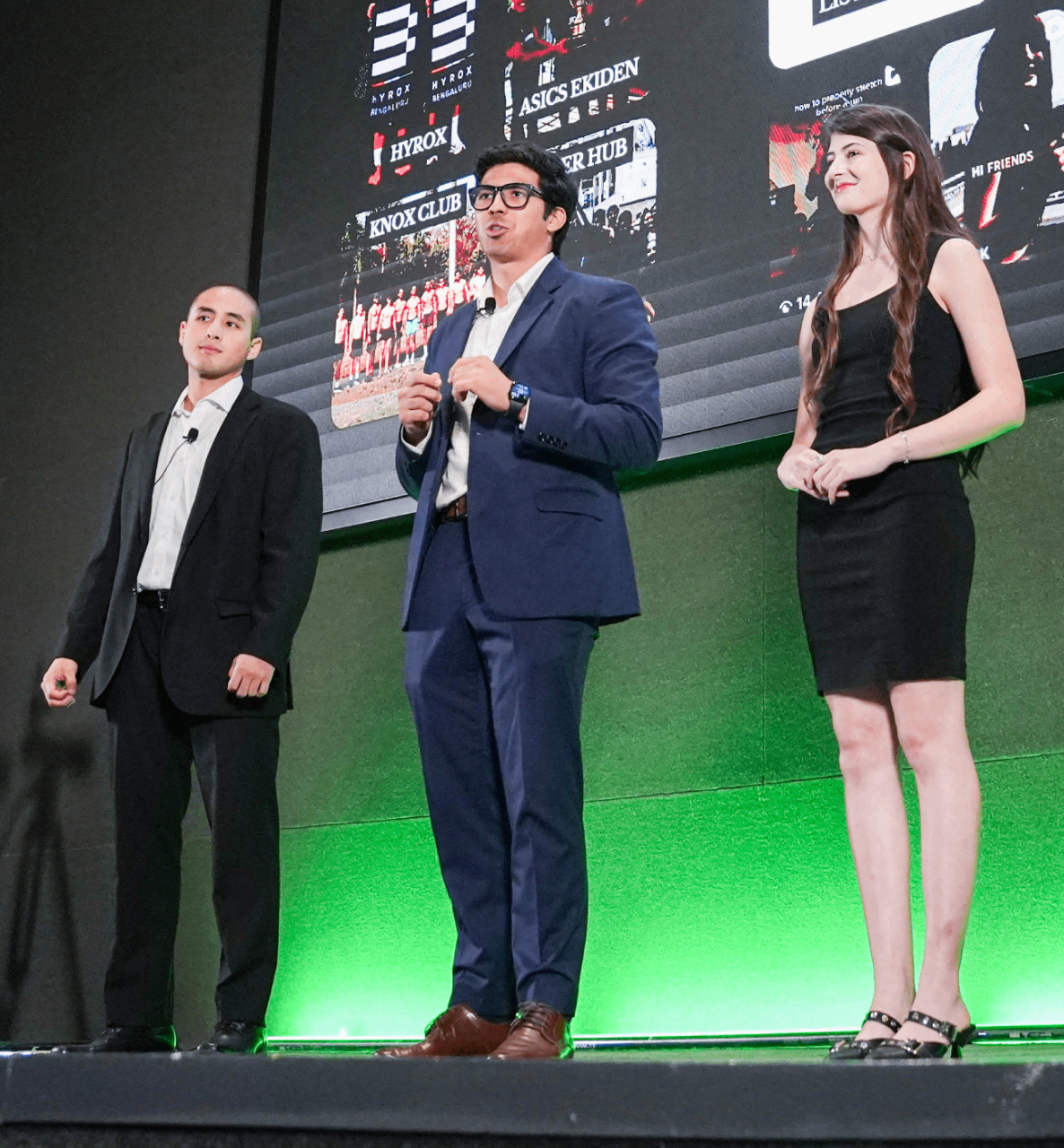
At Tetr, we don't believe in sheltering students from the friction of the free market. We believe in dropping them right into the center of it. When you remove the artificial safety net of a traditional syllabus, education shifts from a spectator sport into high-stakes execution. This isn't just about getting out of the classroom. It is about fundamentally rewiring how you approach problem-solving and leadership.
Here are five undeniable benefits, each highlighting the importance of experiential learning, and how we engineer our global curriculum to deliver them:
Real-world business experience comes with mistakes that cost cash, momentum, and team morale. We want our cohorts to feel that pressure immediately. By launching actual startups with real seed capital, our students get to make those brutal, early-career missteps. They build a tolerance for risk and failure while also developing a resilience that helps them move forward.
You cannot learn how to negotiate with a supplier in Asia by running a corporate simulation in Ohio. True experiential learning forces you to adapt to the culture standing right in front of you. Because Tetr cohorts rotate through seven completely distinct global economies, our students are constantly forced to scrap their existing playbooks. They might spend one semester immersing in Indian culture and the next exploring Europe’s counterculture energy.
Standard business schools host networking mixers where everyone hands out identical business cards and hopes for the best. Experiential learning demands actual, high-stakes partnerships. When you are tasked with building a D2C brand in a hyper-competitive market like India, you aren't just casually making connections. You are actively negotiating with local manufacturers, haggling with logistics providers, and pitching to real venture capitalists. It’s as real as it gets.
Ideas are cheap. Execution is everything. What do you do when a major tech platform crashes during your launch week? You can't hit pause or ask a professor for an extension. You have to manage your team's panic, find a backdoor solution, and keep the operation moving forward. The devil is in the details, and learning how to execute well is of utmost importance to get the details right.
When you sit across the table from a serious investor or an executive board in 2026, nobody is going to ask for your GPA. They want to know what you have built, what you have broken, and what you have survived. One of the key benefits of experiential learning for business students is the proof of capability they walk away with.

By prioritizing high-stakes execution over passive observation, experiential learning completely redefines the college experience. Students don't just graduate with a piece of paper that says they understand business. They graduate with a passport full of stamps, a portfolio of live ventures, and the undeniable proof that they are ready to conquer the global market.
If you’d like to reap the benefits of experiential learning first-hand, explore Tetr’s global Bachelor’s and Master’s programs and get ready to leave a mark far beyond your degree.
Experiential learning in business education is nothing but the concept of “learn business by doing business” come to life. It maximizes learning through capstone projects, business simulations, and global immersions.
The importance of experiential learning for business students lies in the fact that it bridges the gap between theory and practice, allowing them to fail, find solutions, and keep moving forward.
Experiential learning helps students become career-ready by equipping them with the real-world problem-solving, tangible skills, and professional partnerships that employers today demand.
Capstone business projects, internships, global faculty and cohorts create built-in opportunities for students to connect with industry leaders, mentors, and peers, all of whom become part of their global network.
Experiential learning fosters practical skills like real-world problem solving, adaptability, leadership, cross-cultural communication, and teamwork, which boost students’ personal and professional growth.

